|
|
|
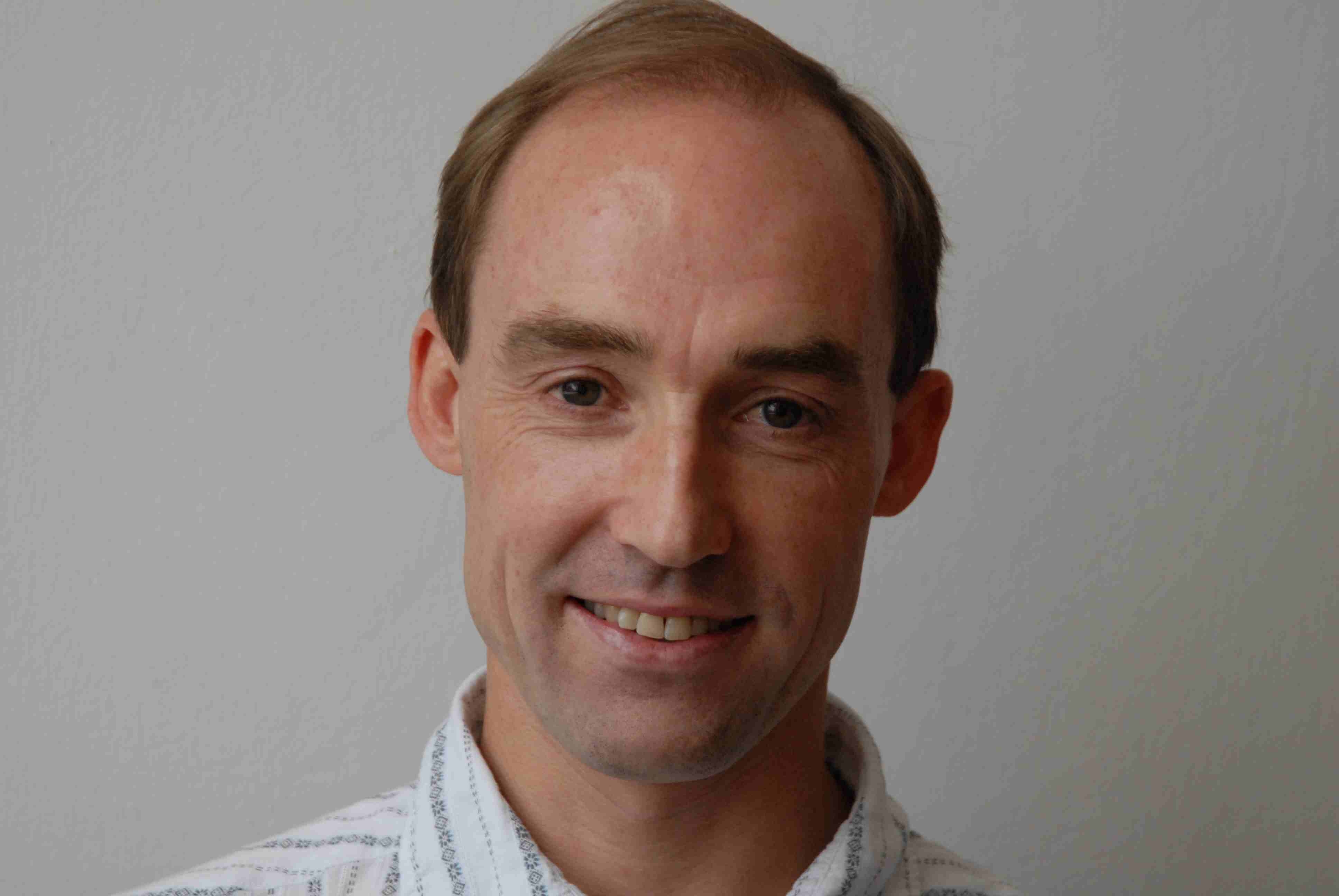
Marcel Holyoak Professor, Department of Environmental Science and
Policy Editor-in-Chief,
Ecology Letters
|
||
|
Shortcut to:
Research
pages Course pages Course materials are on SmartSite Personal
information Other Some of my photos (on Flickr.com) |
|
Phone:
(530) 867-3391 (cell) Fax: (530) 752-3350 Email: maholyoak AT ucdavis.edu Department of Environmental Science and
Policy, University of California, 1 Shields Ave., Davis, CA 95616, USA. Office:
3154 Wickson Hall. Lab:
1219 Education: Introduction to research My
research program focuses on questions about the importance of spatial
dynamics to populations and communities. It addresses theories that are
central to conservation and the maintenance of biodiversity, and combines field,
laboratory and theoretical components. Many of these projects are
collaborative, as described on the pages for each topic area. My work
focuses on four major topics: (1) I am
interested in metacommunities, the role of spatial
dynamics in ecological communities. Ongoing research investigates the
factors that maintain species diversity in both laboratory and field systems.
This work also re-evaluates and challenges existing community theory that was
developed for closed local communities. Recent directions include
investigating the effects unidirectional dispersal and disturbance on spatial
communities. (2) Conservation of
threatened animal species. My lab has worked extensively on the Valley
Elderberry Longhorn Beetle and is currently working on Tricolored Blackbirds.
These projects aim to better understand regional population survival using
knowledge of local and regional dynamics. (3) The
ecology of organismal movement. Collaborative projects developed an
integrative conceptual framework for considering the movement of all kinds of
organisms. I conducted an extensive literature review to identify what
studies of movement usually study, and how they can be improved. In the
long-term I would like to integrate the biology of movement into population
and community ecology in more complete ways. (4) A
long-held interest of mine is developing and testing theory about metapopulations. This work uses
microorganisms (protozoa and bacteria) in laboratory microcosms and
theoretical models as tools for testing and improving ecological theory about
mechanisms of persistence. (5)
Spatial dynamics of wooly bear moths and its host plants in collaboration
with Rick
Karban. The project aims to discover how food web structure and population
dynamics integrate across patchy habitats. Curriculum
Vitae as a PDF
file I am
Editor-in-Chief for Ecology Letters. I am a past member of the editorial
board of The American Naturalist
and Ecology/Ecological Monographs, and a former member of the Faculty of 1000 in biology. |
|
Teaching I accept students through the Graduate Group in Ecology,
although my ability to do this is usually dependent on funding being
available. Information for prospective graduate students. I
currently teach two courses. I am also the master advisor for students
in the Environmental
Biology and Management major and co-Master Advisor of the Environmental
Science and Management major. See SmartSite.ucdavis.edu
for course pages. Current
courses taught by me are below. ESP010.
“Current Issues in the Environment.” Course covers the science behind
environmental issues, and policies affecting our ability to solve domestic
and international environmental problems. Resources, environmental quality,
regulation, environmental perception and conservation. Integrative case
studies. Prerequisite: elementary biology recommended. Not open for credit to
students who have completed course 1. GE credit: SciEng. ECL200A
"Ecological Principles and Applications" forms the first part of
the core course for the Graduate Group in Ecology. The main aim of Ecology
200A is to provide students with a broad background in the principles,
theoretical underpinnings, and applications of ecology. This serves as
preparation for more specialized courses in the ecology program and gives
students a general grounding in ecology. The course has a lecture and
discussion format. Lectures aim to give the necessary background to
understand ongoing debates in ecology and to synthesize the current state
of empirical and theoretical knowledge of a broad range of areas in ecology. |
Last modified 03/26/2013,
M. Holyoak