

Beverly Ajie
B.S., Biology, Minor in Biological Anthropology. University
of Oregon. 2001.
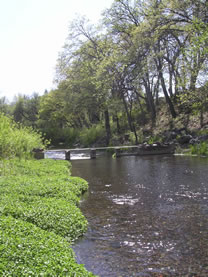 I am interested in the evolution of complex behaviors and suites of behavior
including mating behavior, predator avoidance, dispersal and aggression.
In particular, I am interested in how animals balance, ecologically and
evolutionarily, the trade-offs that arise due to performing or being equip
to perform one or another of these types of behaviors at the expense of
the others. I am also interested in how behavior interacts with morphology
and life-history in the process of phenotypic evolution. Specifically,
my dissertation research will focus on describing:
I am interested in the evolution of complex behaviors and suites of behavior
including mating behavior, predator avoidance, dispersal and aggression.
In particular, I am interested in how animals balance, ecologically and
evolutionarily, the trade-offs that arise due to performing or being equip
to perform one or another of these types of behaviors at the expense of
the others. I am also interested in how behavior interacts with morphology
and life-history in the process of phenotypic evolution. Specifically,
my dissertation research will focus on describing:
1) Patterns of functional and genetic integration between induced behavioral
and morphological anti-predator defenses.
2) The adaptive significance of correlations between behavioral tendencies
that persist across ecological contexts (i.e. behavioral syndromes).
3) The evolution of patterns of phenotypic and genetic integration in
response to correlational selection.
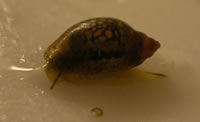 The
key player in the freshwater system that I use to investigate these issues
is the pulmonate snail, Physa sp. Physids are small (up to 15mm) herbivorous
and detritivorous snails. They are an important component of aquatic food
webs in streams, lakes and ponds worldwide. These snails are ideal for
ecological evolutionary studies due to their small size, fast generation
time and high fecundity.
The
key player in the freshwater system that I use to investigate these issues
is the pulmonate snail, Physa sp. Physids are small (up to 15mm) herbivorous
and detritivorous snails. They are an important component of aquatic food
webs in streams, lakes and ponds worldwide. These snails are ideal for
ecological evolutionary studies due to their small size, fast generation
time and high fecundity.
 |
|
|
 |
|
|
 |
 |
|
 |
|
|
 |
|
|
 |
|
|
 |
 |
|
 |
|
|
 |
|
|
 |
|
|
|
|||||||||||||||||||||||||||||||
